
Designing for Deep Rest: How a Feng Shui-Informed Blue Palette Transforms the Bedroom
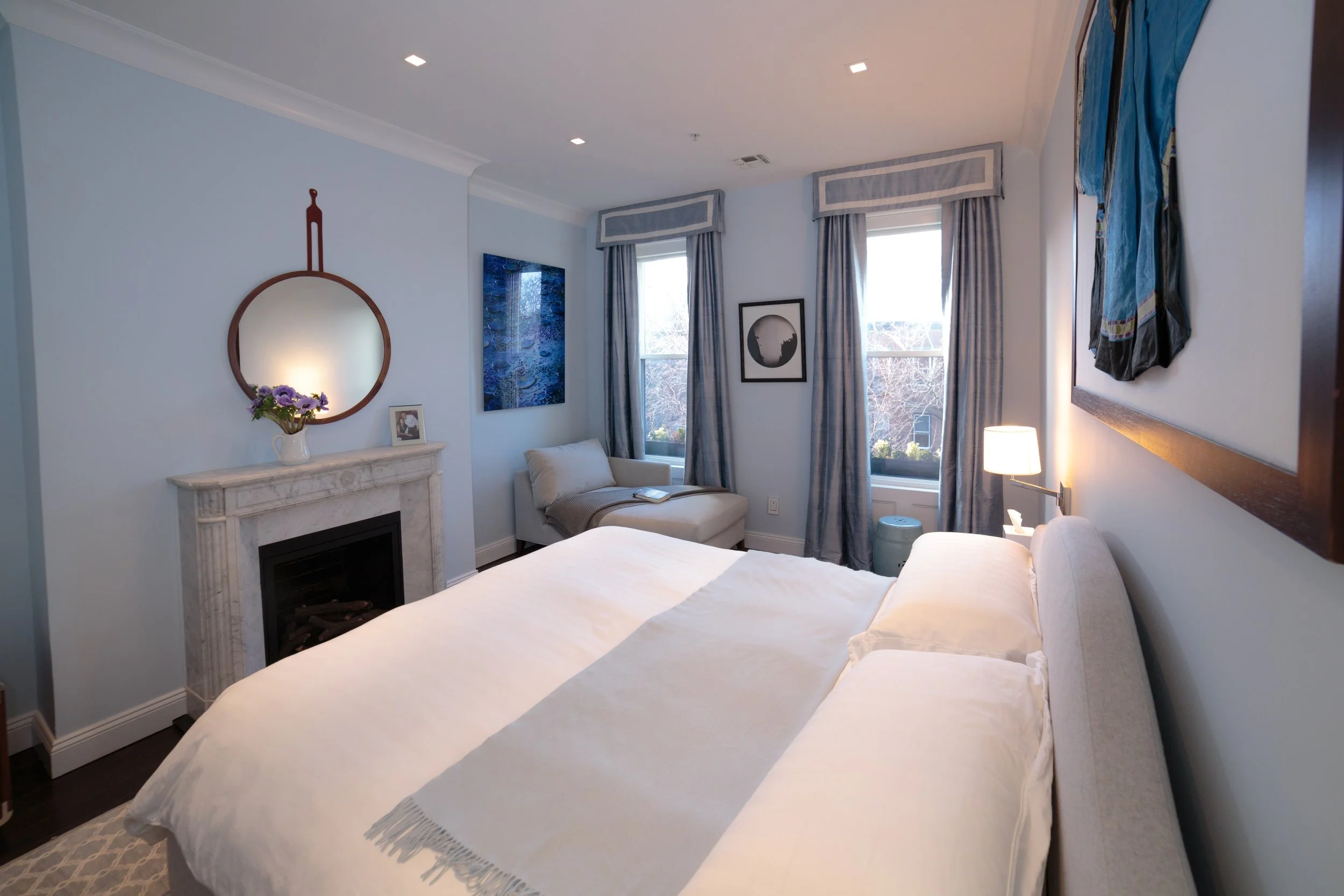
Elegant Light Blue Bedroom with Marble Fireplace and Vintage Accents - Marie Burgos Design
Quick answer: In Feng Shui and modern design alike, blue is considered a Water element — associated with stillness, introspection, and restoration. When a bedroom is built around this palette with intention (the right undertone, the right light temperature, the right texture), it stops being just a place to sleep and becomes a room that actively supports rest.
As a designer, I'm asked constantly why certain bedrooms feel restful the moment you walk in, while others — even beautifully furnished ones — feel busy or unsettled. The answer almost always traces back to color, and specifically, to how a room's palette interacts with the nervous system.
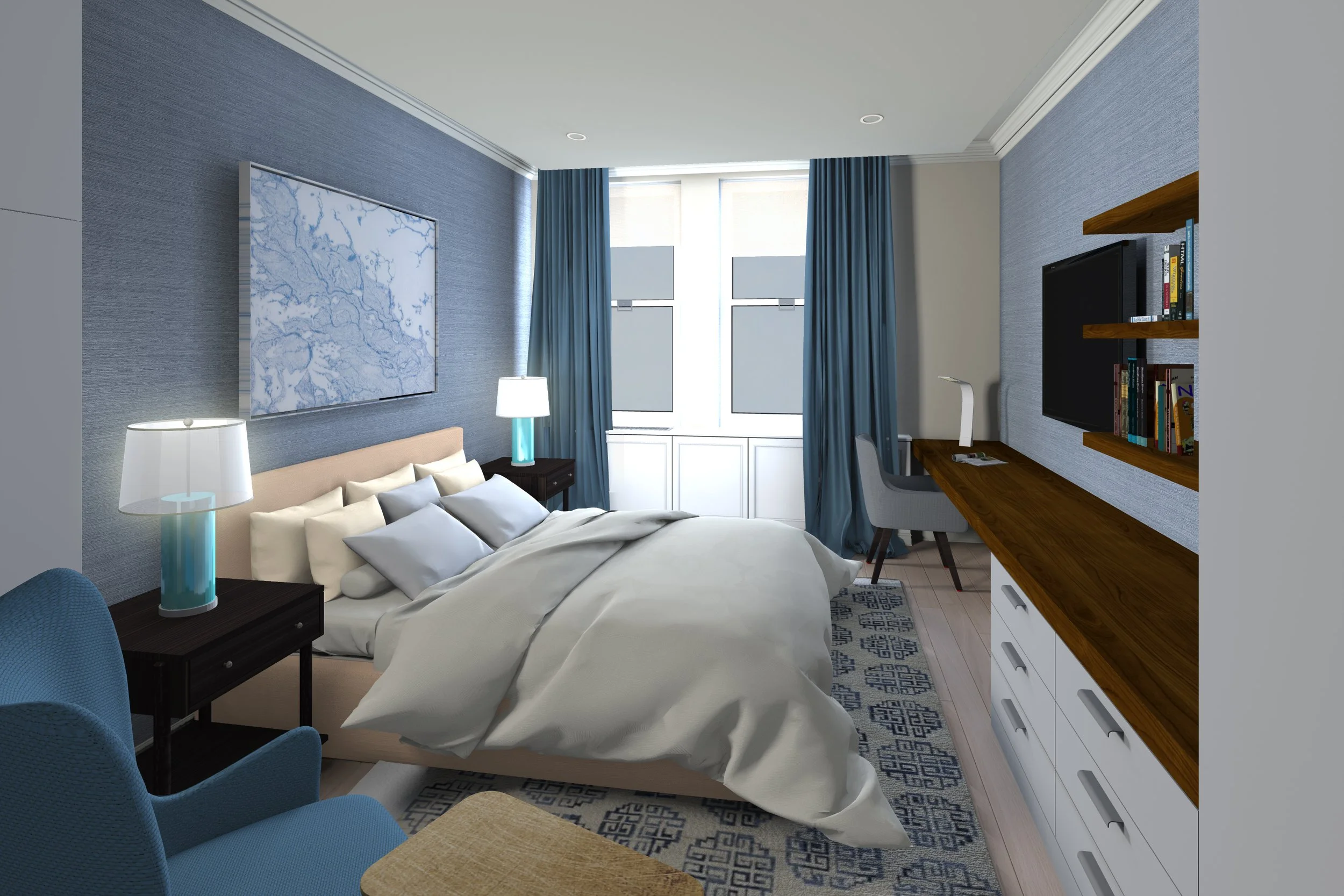
Lombardy Hotel Bedroom suite- Marie Burgos Design
Color as a Design Tool, Not a Decoration
In my practice, I don't choose color at the end of a project. I choose it at the beginning, because it sets the emotional register for everything that follows — the furniture, the lighting, even the layout.
Blue holds a particular place in this process. Physiologically, cooler hues are linked to a calming shift in the body: heart rate eases, cortisol lowers, and the mind has an easier time letting go. In Feng Shui terms, blue carries Water energy — the element of flow, calm, and yin (restorative) energy, which makes it a natural fit for a room whose sole job is recovery.
But there's a common mistake I see in DIY attempts at a "calming blue room": the blue is too cool, too flat, or too matched — and the result reads clinical instead of soothing. Getting this right is a matter of degrees, not just hue.
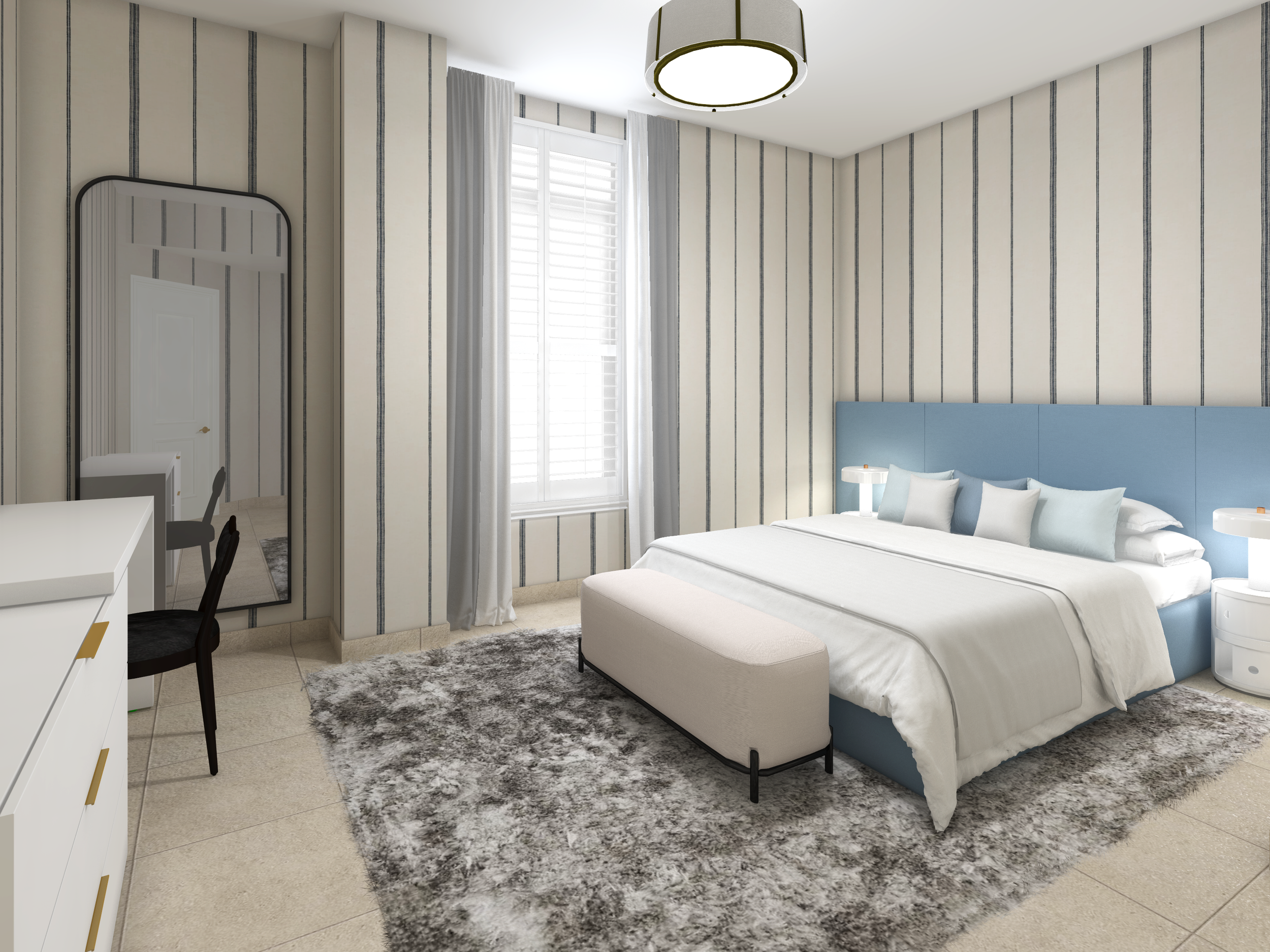
Teens Blue bedroom design - Florida Residence- Marie Burgos Design
My Process for a Blue Bedroom That Actually Feels Restful
Anchor the Room With One Considered Piece
I always start with the largest surface in the room — usually the bed. A tufted or upholstered headboard in a muted, grounded blue does more work than any accent piece could. It sets the undertone for the whole space before a single pillow is added.
Build Layers, Not Matches
A common mistake is treating "blue bedroom" as one blue, repeated. Instead, I layer several tonal variations — navy, slate, dusk — against cream and natural fiber textiles. This is what keeps a cool palette from tipping into cold. The contrast between deep blue and warm neutral is what the eye (and the nervous system) reads as balanced.
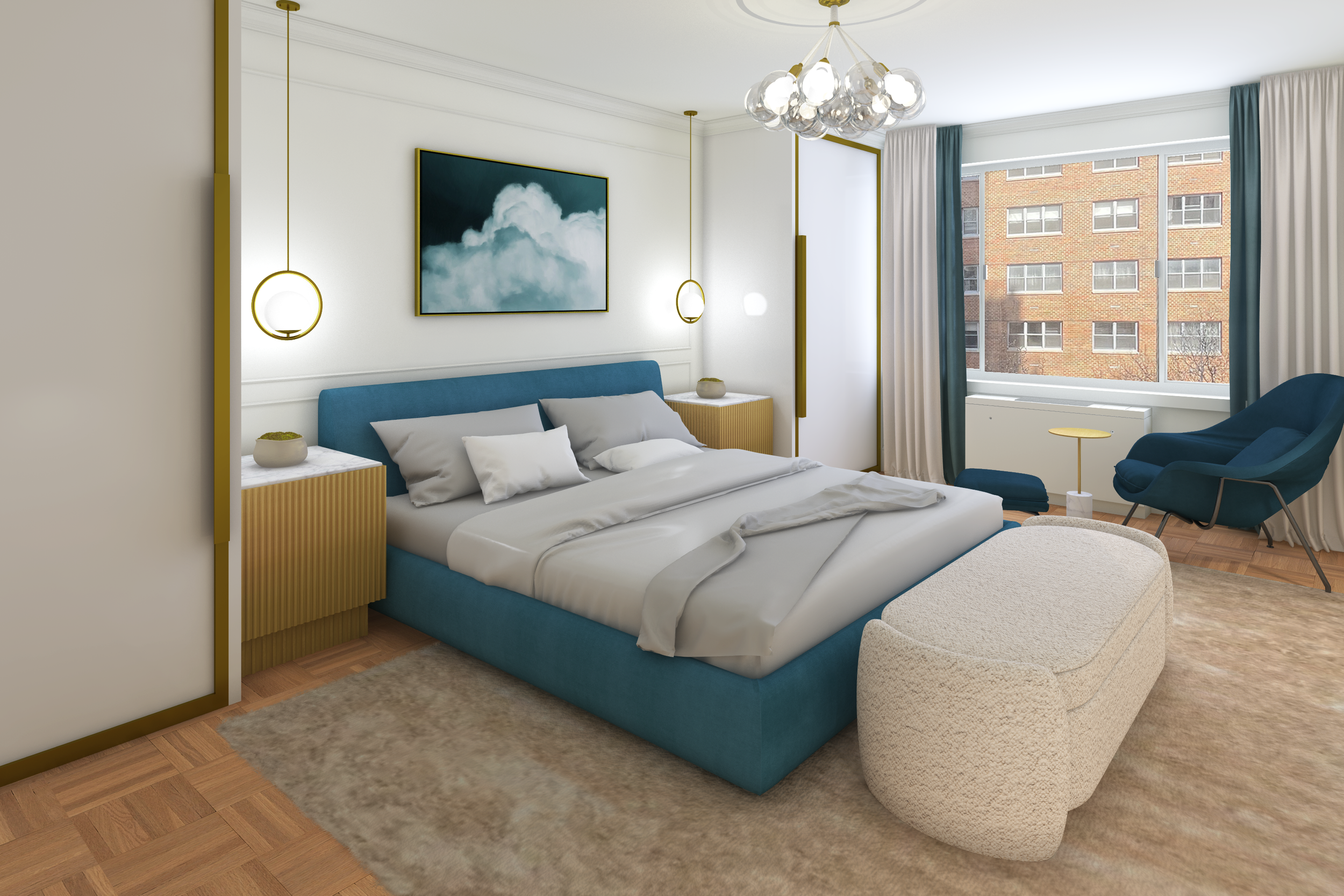
Zen cloud bedroom design Manhattan Condo - Marie Burgos Design
Clear the Surfaces
Feng Shui places heavy emphasis on clutter as a disruptor of chi, or energy flow, and modern sleep science backs this up: visual clutter keeps the mind alert rather than settled. I favor nightstands with clean, minimal silhouettes — nothing with sharp angles or excess ornamentation near the head of the bed.
Get the Light Temperature Right — Every Time
This is the detail most people get wrong, and it undoes an otherwise well-designed room. Overhead white light — anything above roughly 3000K — works directly against a calming palette, no matter how well the color scheme is executed. I specify warm-temperature lighting (2700K) throughout bedroom projects, layered through table lamps and low, diffused sources rather than a single overhead fixture. In the evening, candlelight takes over entirely.
Engage the Other Senses
A room that looks calm but smells or feels neutral is only half-finished. Subtle, unobtrusive scent — nothing sharp or seasonal — and soft, natural-fiber textiles complete the sensory picture. The goal is a room that feels calming with your eyes closed, not just open.
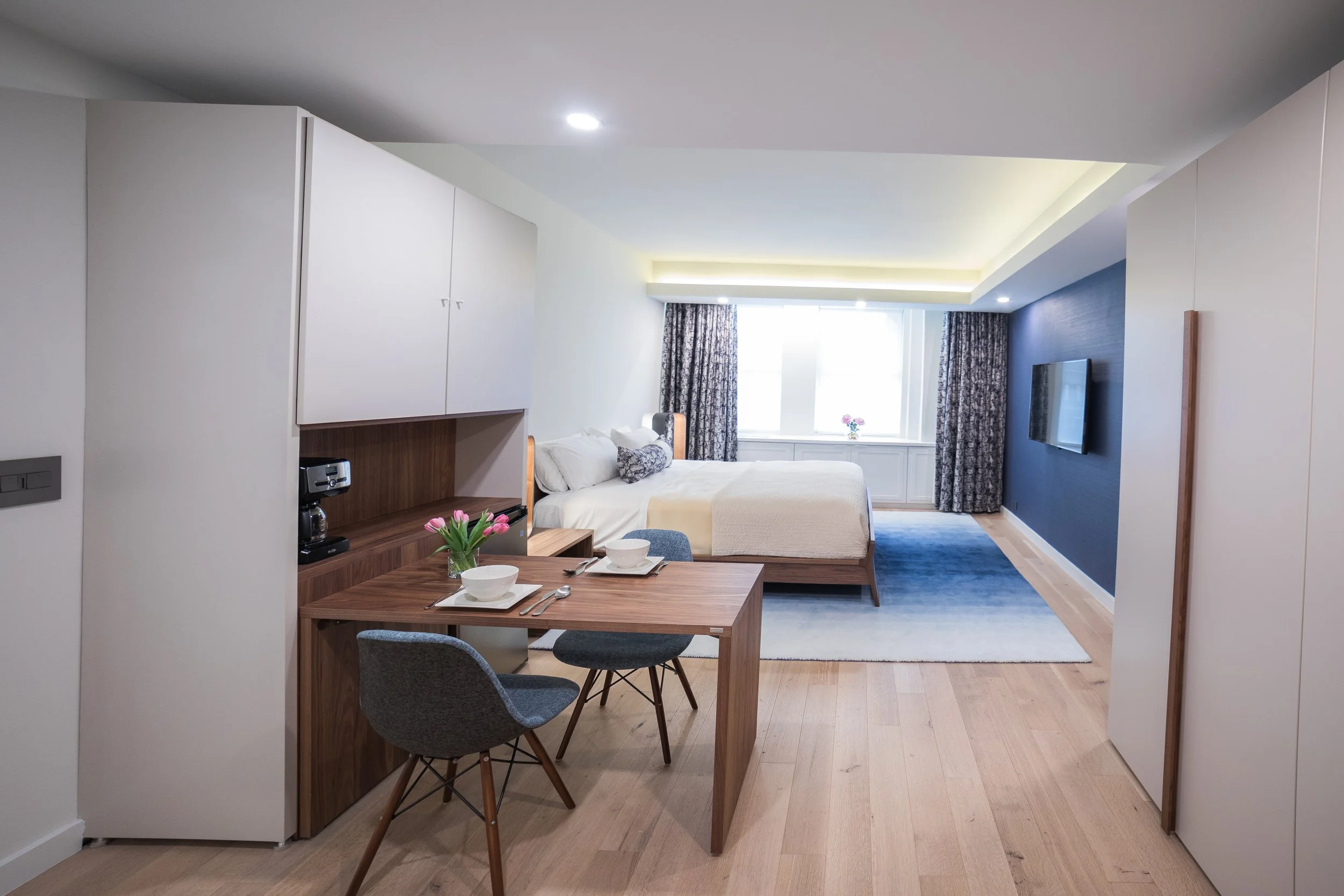
Lombardy Hotel suite Bedroom remode - Marie Burgos Design
Why This Matters Beyond Aesthetics
I think of bedroom design as preventative wellness design. A room that supports genuine rest has effects that extend well past sleep quality — it shapes mood, focus, and resilience throughout the following day. This is the foundation of what I call Holistic Luxury: design that considers the nervous system as seriously as it considers materials and proportion.

Ballroom-Wall-Light-Sconce-Blue-Glass-Gold-Trim-Marie-Burgos-Collection
Frequently Asked Questions
Is blue actually a good color for a bedroom, or is that just a trend? It's grounded in both design tradition and physiology. Cooler tones are associated with parasympathetic (rest-state) nervous system activation, and in Feng Shui, blue represents the calming Water element — which is why it appears so consistently in spaces designed for recovery and sleep.
How do I stop a blue bedroom from feeling cold? Layer tonal variation rather than a single flat blue, and balance it with warm neutrals — cream, natural wood, warm metals — plus warm-temperature (2700K) lighting throughout.
Does Feng Shui really apply to modern interior design? Yes — many Feng Shui principles, like minimizing clutter and balancing cool and warm elements, align closely with what contemporary design and even sleep science recommend. I integrate it as one input among several, not as a strict rulebook.
What's the single highest-impact change for a more restful bedroom? Lighting temperature. Even a well-chosen color palette is undermined by cool, overhead white light. Switching to warm 2700K sources is often the fastest, most noticeable shift.
Ready to Design Your Own Sanctuary?
Whether you're planning a full bedroom redesign or simply want a second opinion on your palette, I'd love to talk through your space.
— Marie Burgos, Marie Burgos Design